
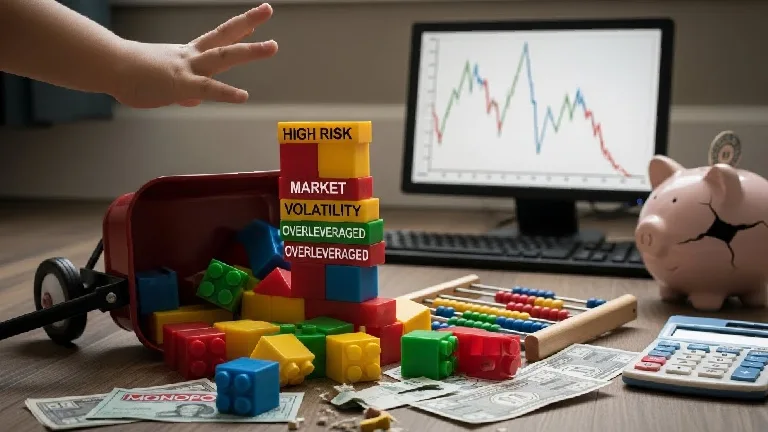
As we enter the final days of 2025, the global financial landscape has undergone a tectonic shift. For the past decade, “Growth at any cost” was the mantra, led by Silicon Valley tech giants and speculative crypto assets. However, the economic reality of late 2025 has forced a massive rotation of capital. High persistent inflation, debt restructuring in major economies, and the “de-dollarization” of global trade have sparked what experts are calling the 2026 Commodities Supercycle.
At The Daley Trade, we focus on the “Trade-Off.” In this market, the trade is simple: investors are swapping digital volatility for physical certainty. This guide explores why Gold and Silver are no longer just “grandpa’s investments” but essential tools for the modern 2026 portfolio.
1. The Macro-Economic Ignition: Why 2026 is Different
To understand why Gold and Silver are surging, we must look at the macro environment. In 2025, central banks worldwide—led by the BRICS nations—have purchased gold at a rate not seen since the 1970s.
The Death of “Real Yields”
Traditional savings and bonds are no longer keeping pace with the “True Inflation” of 2025. While official numbers might stay low, the cost of living and energy remains high. When “Real Yields” (interest rates minus inflation) are negative or near-zero, Gold becomes the ultimate store of value. Unlike a currency, Gold cannot be printed into oblivion.
2. Gold: The $4,500 Target in 2026
Gold has traditionally been a “slow” asset, but the volatility of 2025 has changed the narrative.
- Central Bank Accumulation: Central banks are moving away from Treasury bonds and into physical bullion. This creates a “supply squeeze.”
- The Psychological Floor: Every time Gold has dipped below $3,000 in 2025, it was met with aggressive buying. This established a new “institutional floor,” meaning the risk-to-reward ratio for new buyers is highly favorable.
- Geopolitical Insurance: With multiple global conflicts remaining unresolved as we enter 2026, Gold acts as the only “borderless” currency that carries no counterparty risk.
3. Silver: The “Electric” Opportunity
While Gold gets the headlines, Silver is the “secret weapon” of the 2026 trade. Silver is unique because it is both a precious metal (monetary) and an industrial metal (utility).
The Green Energy Demand
The transition to renewable energy—specifically solar panels and Electric Vehicles (EVs)—requires massive amounts of silver. In 2025, industrial demand for silver reached an all-time high, while mining production remained stagnant.
- The Silver-to-Gold Ratio: Historically, the ratio sits around 60:1. Currently, it is much higher, suggesting that Silver is significantly undervalued compared to Gold. For the savvy trader at The Daley Trade, this “divergence” is the perfect entry signal.
- The “Poor Man’s Gold” Myth: Silver is no longer just a cheaper alternative to gold; it is a critical component of the 2026 technological infrastructure.
4. How to Structure Your 2026 Metals “Trade”
Investing in 1,000-word depth means looking at how to buy, not just what to buy. Pros in 2026 are using a tiered approach:
Tier 1: Physical Bullion (The Foundation)
You should own at least 5-10% of your net worth in physical coins or bars. This is your “insurance policy” against systemic banking failure. Use a secure vault or a high-quality home safe (refer to our Home Office Gear article for security recommendations).
Tier 2: Digital Gold (The Liquidity)
For active traders, using “Tokenized Gold” on the blockchain allows you to own physical gold but trade it with the speed of an altcoin. This provides the best of both worlds: the safety of the metal and the liquidity of the digital age.
Tier 3: Mining Stocks (The Leverage)
If Gold moves up 10%, high-quality mining stocks often move up 30-40%. This is the “Aggressive Trade.” Look for companies with high “All-In Sustaining Costs” (AISC) margins and low debt in 2026.
5. Common Traps to Avoid in 2026
As the Commodities Supercycle picks up steam, many “scam” products will emerge.
- High-Premium “Numismatic” Coins: Avoid “rare” coins unless you are a professional collector. Stick to standard bullion coins (Eagles, Maples, Krugerrands) for the best resale value.
- Unallocated Accounts: If you don’t hold the title to a specific bar, you don’t truly own the gold. In a 2026 liquidity crisis, “unallocated” paper gold may become worthless.
- Over-Leveraging: Commodities are volatile. Never trade gold on 50x or 100x leverage. The goal of this asset class is wealth preservation, not gambling.
Conclusion: Trading Fear for Fortitude
The 2026 Commodities Supercycle represents a once-in-a-generation shift. By moving capital into Gold and Silver now, you are not just “buying a metal”; you are buying a seat at the table of the new global economy. At The Daley Trade, we encourage you to use the live tickers on our site to monitor these entries daily. The trend is clear: the physical world is reclaiming its value.